
News ·
Connecticut's plug-in solar law, in effect from October 1, 2026
From October 1, 2026, Connecticut lets you plug a solar device of up to 1,200 W into an outlet without an interconnection agreement. What the law says, and what it leaves to your town.
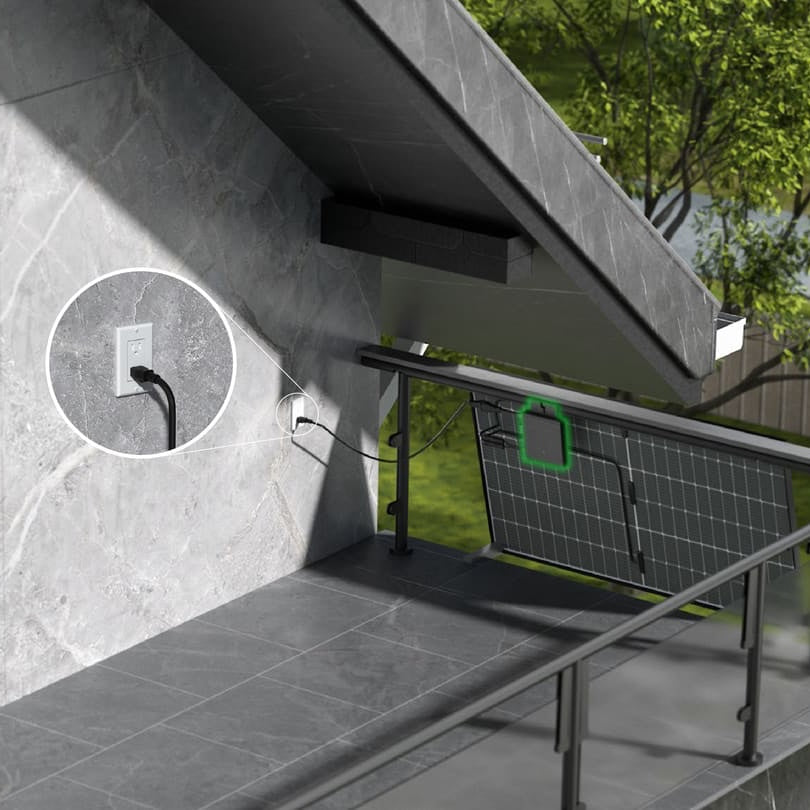
Connecticut's plug-in solar law applies from October 1, 2026. It is Section 9 of Public Act 26-127 (HB 5340). Here is what it says, in its own words where it matters.
What counts
The Act calls it a "portable solar generation device". To qualify, a device must:
- not be permanently affixed to a structure
- have a maximum power output of not more than 1,200 watts
- plug into a standard 120 V outlet behind your electric meter
- be meant mainly to offset part of your own use
- meet the State Building Code, the National Electrical Code and IEEE 1547
- be certified by UL or an equivalent nationally recognized testing laboratory and meet UL 1741
- stop feeding your home's wiring in a power outage
- come with a warning that any power it makes beyond what your home is using "will result in such excess generation being charged to the customer as usage unless such customer utilizes an electric meter that allows for net metering"
What it changes
A device that meets those terms is exempt from the utility's interconnection-agreement requirements, as long as there is no more than one device behind your meter.
Your utility cannot require its approval before you install or use it, charge a fee for it ("except any charges the system incurs through its use"), or make you add equipment beyond what is built into the system. The law also says the utility is not liable for damage or injury a device causes.
What it leaves alone
The law does not exempt a device from "the State Building Code, the Fire Safety Code, the State Fire Prevention Code or any provision of any local ordinance or regulation". Your town's rules still apply, so ask your building department whether it wants a permit.
Section 9 says nothing about HOAs or landlords. If you rent or live under an association, it keeps its say. Get written permission before you hang anything on a railing you don't own.
The warning, in plain terms
Unless your meter allows net metering, power the device sends back out is charged to you as usage. Ask your utility which meter you have. Either way, size a plug-in system to what your home draws during the day. When the fridge, router and chargers draw more than the kit makes, all of its output goes to your own use.
The Act puts this warning in the box, not just on a web page. Every kit we ship to Connecticut carries it on a printed sheet packed with the inverter.
What a kit makes in Connecticut
Hanging vertical on a south-facing railing in Hartford, NREL's PVWatts puts our 200 W kit at about 180 kWh a year, worth about $53 at Connecticut's average rate of 29.38¢. The 400 W kit makes about 360 kWh, about $106 a year. East or west, and with shade, it makes less. See your own numbers.
Both kits use a Hoymiles HiFlow Pro (HMS-391-1WM-LV) inverter, certified to UL 1741 by CSA Group (record 261002-5311-89). We ship to Connecticut.
This is a summary of the Act, not legal advice. Read Connecticut's page for the cite and our state table.
General information, not legal advice. US Plugin Solar is a retailer, not a law firm, and reading this doesn't make you our client. This post summarizes the law as we read it when we wrote it. Laws, utility rules and local codes change, and your HOA documents, lease or town can add requirements this page can't see. Read the cite, and ask a lawyer licensed in your state if your plans depend on it.
Connecticut: the statute, its effective date and what it saves there →
Plug-in solar for a railing
Two kits and the approval pack for your HOA or landlord. Free shipping in the US, except NY, ME and VT.